Individual URL Submission
Open Google Search Console.
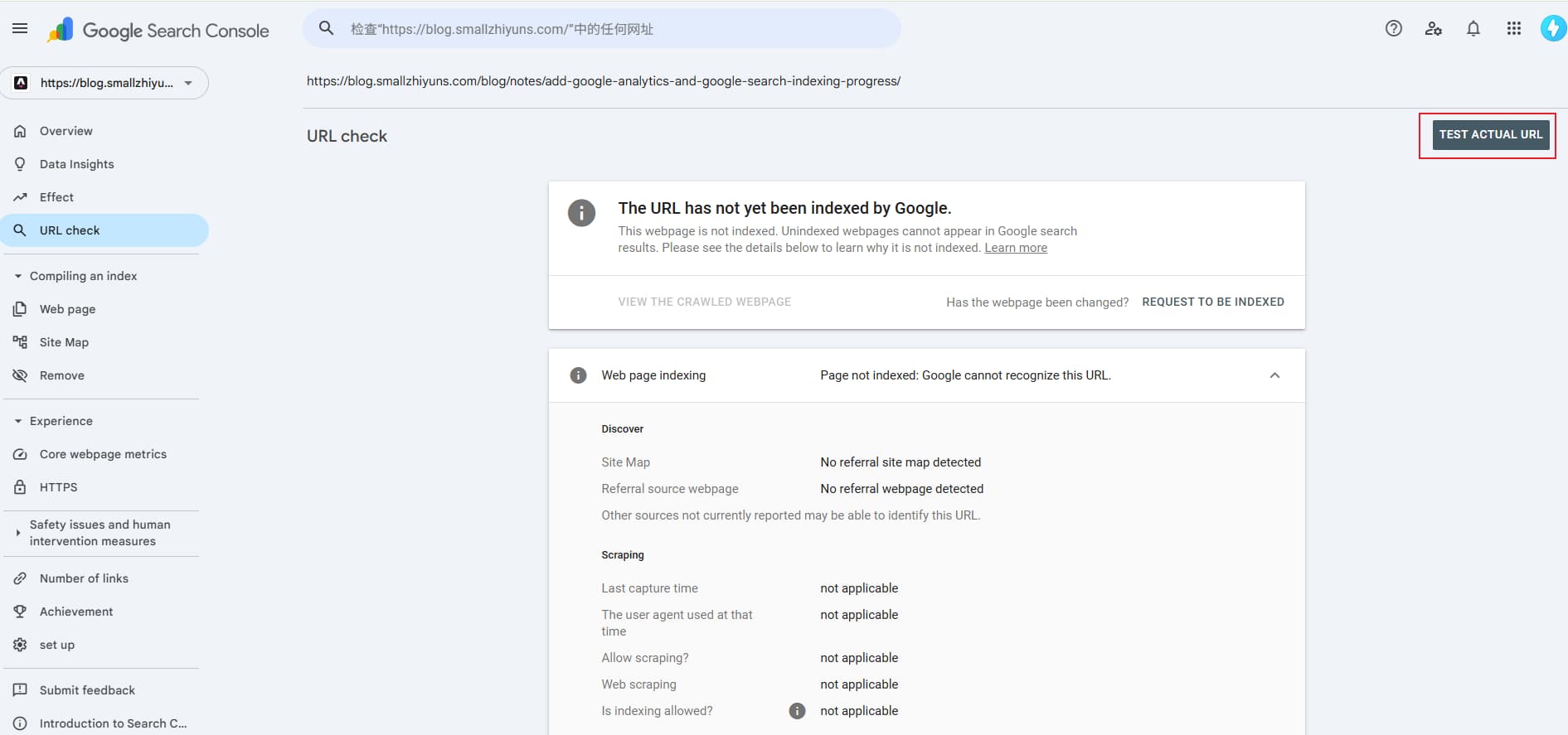
Enter the URL you wish to submit into the search box located at the top of the page.
Press Enter.
Next, click “Test URL” (located within the red box). Google will take 1–2 minutes to check whether the webpage meets the necessary criteria.
If the page passes the check, click “REQUEST INDEXING” to submit it to Google (placing it in the queue for indexing).
Important Notes
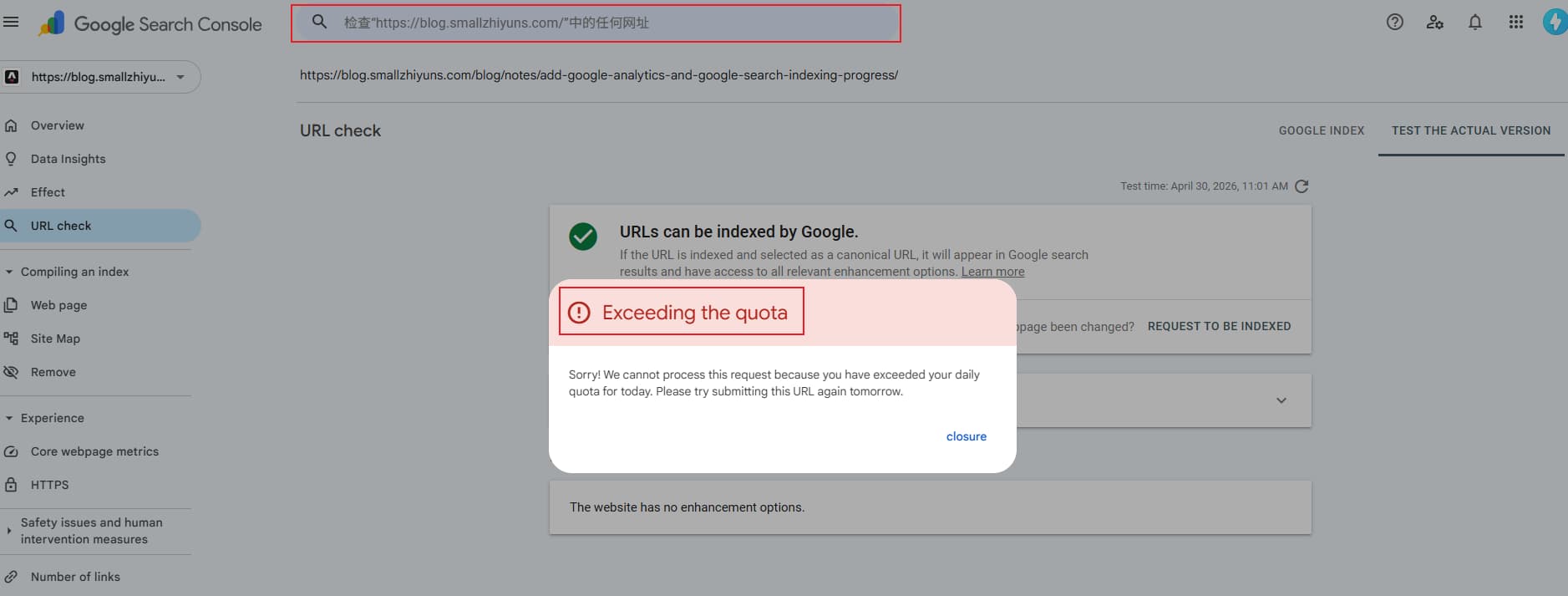
There is a daily limit on the number of URLs you can submit for indexing.
I haven’t tested the exact limit myself, but I estimate it to be around 10 URLs per day.
Previously, I was only aware of submitting a sitemap to Google; I hadn’t realized that Google’s URL submission feature was integrated directly into the search bar—unlike Bing, which features a dedicated menu option for individual URL testing.
I was completely unaware that the search box at the top of Google Search Console possessed this functionality.
It was only after following a suggestion provided by an AI assistant that I discovered this feature existed.
This goes to show that there is still much to learn and explore when it comes to SEO for blogs and websites.
Brief Summary
Today, I asked ChatGPT if there were any search engines—other than Google and Bing—that would be suitable for me to use to expand my website traffic.
ChatGPT informed me that Google holds a 90% market share, Bing holds 5%, and all other search engines collectively account for the remaining 5%.
Therefore, strictly in terms of market share, there is no real need to bother adding any other search engines.
Furthermore, even if one were to attempt it, other search engines would still prioritize checking your site’s authority and standing on Bing and Google first. If your performance on Bing and Google is poor, the smaller search engines won’t even give you a second look. Essentially, you still only need to prioritize Google first, followed by Bing as a secondary focus.
Based on the test results from my blog over the past two weeks, traffic from Bing has been abysmal; it consistently fails to index my content. Conversely, Google—to which I submitted URLs almost as an afterthought—indexed them very quickly. Its management dashboard provides rich data, and it offers a comprehensive professional ecosystem that includes tools like Google Analytics and Google Ads—whereas Bing offers none of these features.
Consequently, my plan going forward is to prioritize SEO efforts for Google Webmasters, treating Bing as a secondary, supplementary task. In the future, I will prioritize whichever platform generates the most traffic and provides the best feedback, though Google will remain my default priority.
My intention is to wait until after midnight to check which of the URLs I submitted today have successfully been indexed. I will then verify whether my daily URL submission quota has reset. Finally, I plan to conduct a test to determine the exact maximum number of URLs I can submit in a single day—seeking a precise figure rather than a vague estimate like “around 10.”
Revenue Strategy
My plan is to prioritize getting the blog indexed by search engines, aiming to generate some organic traffic—specifically from Google—right from the start.
In the initial phase, I will refrain from integrating affiliate commissions or paid membership options. My priority is to ensure the website remains clean and professional. Once traffic has stabilized, I will attempt to apply for Google AdSense. (A note for beginners: if your website already hosts other affiliate ads prior to applying for AdSense, it will likely negatively impact the review process—often resulting in an outright rejection.)
Once the AdSense application is approved and the ads are successfully deployed (without disrupting the user’s reading experience), I will then consider adding affiliate commissions—such as those from Amazon, VPS providers, or other partners.
After testing these affiliate channels to ensure they generate a reasonable volume of traffic and revenue, I will then, at my discretion, consider introducing paid products—such as e-books or premium memberships. This is because Google AdSense and standard affiliate programs often yield relatively low returns; furthermore, they typically impose minimum thresholds for payouts and involve lengthy payment processing times, whereas direct sales (e.g., paid e-books) offer faster payouts and greater financial control.
It would be even better if I could secure affiliate partnerships with cloud storage providers; this would allow me to offer downloadable content to my audience while simultaneously providing a convenient solution for my own file storage and sharing needs.
Ultimately, I intend to utilize these four revenue streams to cover the costs of my cloud server hosting and ongoing website maintenance (such as code updates). If these efforts generate surplus revenue that helps boost my personal income, that would be an even greater bonus.