Outdoors and Beyond
For a digital nomad, life isn’t just about traveling from place to place; it also requires establishing a personal “home base.”
This home base consists of a physical residence and a “homelab.” It serves as the foundation for building a personal studio, a dedicated workstation, and automated income streams, while also acting as a super-intelligent assistant for when you are out on the road.
For instance, it provides reliable GPS location tracking and one-touch emergency alerts; hosts consistently online blogs and utility websites; runs custom-built, exclusive scripts; and powers local AI servers, among other capabilities.
I have never placed my trust in third-party online services—not even those provided by major tech giants. Take security cameras, for example: if a pet goes missing or an item gets damaged, you can typically retrieve the surveillance footage from a cloud server. However, in the event of a serious crime—such as arson or homicide—these companies might deliberately delete the relevant footage to mitigate negative publicity, thereby leaving you with absolutely no evidence. Only a self-built, redundant surveillance system—such as an offline monitoring setup powered by a Raspberry Pi—can guarantee the integrity of your video records, ensuring they cannot be remotely tampered with or deleted.
Currently, I utilize a combination of Raspberry Pis, Orange Pis, and Minisforum mini-PCs to serve as my local servers. This very article, for instance, was drafted using ShowDoc—a documentation tool that I have hosted on my Orange Pi 3B for several years now.
Recently, I’ve been planning to leverage YouTube videos as a means to drive increased traffic to my blog.
After mulling it over for a few days, I realized that focusing solely on the ESP32 is too niche, while the Raspberry Pi audience tends to be overly “geeky,” and the Home Assistant community isn’t particularly large either. I eventually concluded that my original focus—the “homelab” concept—is actually the perfect fit.
This is because the homelab umbrella encompasses all these elements—ESP32s, Raspberry Pis, Home Assistant, personal workstations, and more. Furthermore, the homelab format lends itself perfectly to video demonstrations, showcasing hardware, DIY projects, and real-world applications. It doesn’t even require me to speak on camera; instead, viewers who wish to replicate the effects shown in the video will need to consult the code snippets provided in the accompanying blog posts—making it easy for them to copy and paste the necessary scripts.
I can also use this platform to recommend specific products—such as Raspberry Pis, various sensors, and mini-PCs—through Amazon affiliate links.
As long as my YouTube videos on this subject don’t end up with zero views, there is a good chance I can successfully drive traffic to my blog—aiming for around 10 clicks per day. Once I reach that point, I can apply for Google AdSense and begin incorporating affiliate marketing links into my articles to generate additional revenue.
Transportation
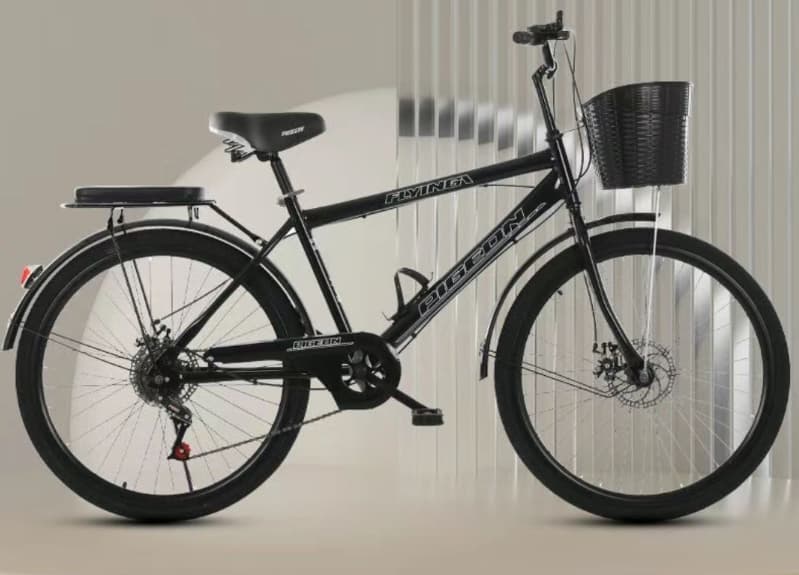
I ordered a bicycle online, and after waiting a full five days, it still hasn’t arrived; I’m hoping it finally gets here today.
After all, one’s mode of transportation determines the radius of one’s daily life.
The place I’m renting is in a rural area on the outskirts of the city. To get anywhere, I have to walk at least 800 meters just to exit the village before I can access public transport options like buses or shared bicycles.
Without a vehicle, leaving the village entrance is both a dangerous and time-consuming ordeal. There are over a dozen dogs on the road that frequently bark wildly and snap at people. Riding an electric scooter makes it manageable, but walking significantly increases the risk.
Furthermore, walking those 800 meters takes ten minutes. If I happen to be carrying bags or other items, it becomes incredibly inconvenient—hence the need for a personal mode of transport.
The cheapest option is a bicycle, which also has the advantage of requiring no charging.
A relatively convenient option is an electric scooter, though it requires both charging and a driver’s license.
Next is a three-wheeled vehicle; these are typically purchased only when one needs to transport large quantities of goods, so they aren’t necessary for daily use.
Then there is the car—it can be refueled or recharged, and it offers protection against wind and rain. Its downsides are high cost and the lack of available parking spaces.
Finally, there is public transportation. The most common form is the bus—it’s slow, but affordable.
Another option is shared electric scooters; they are convenient but expensive. A casual ride of just ten or thirty minutes can rack up a significant cost, so they are best reserved for temporary use. Additionally, they are subject to “geofencing” restrictions, meaning they cannot be ridden into many specific areas.
For longer-distance travel, one is limited to taking a taxi, or switching to high-speed rail or air travel.
# Bicycle
The image below shows the bicycle I ordered online; as of now, it still hasn’t arrived.
I plan to use it for tasks like taking out the trash, picking up package deliveries, and riding to the village entrance to grab breakfast.
On a daily basis, I can also use it to cycle around the neighborhood in the mornings—a great way to help lose weight.
# Looking Ahead
Down the road, I’ll consider purchasing an electric scooter; this would make it convenient to run errands—such as grocery shopping—or to visit great restaurants and scenic spots. It would be perfect for getting around locally without any hassle.
However, if I were to travel to other cities or more distant destinations, I would need to buy a small car; that way, I could easily embark on self-driving road trips.
Consequently, a bicycle would be limited to a radius of about 3 kilometers—suitable for quick trips to the local market, the supermarket, or to pick up packages.
An electric scooter would cover a radius of up to 30 kilometers, allowing me to explore all the best eateries within my current city, visit scenic areas and parks, or head to the train station.
A car would allow me to push beyond the 100-kilometer mark, enabling me to drive directly to neighboring cities to sample their local delicacies and admire their unique scenery.
For destinations even further afield—spanning across regions or even nations—high-speed trains and airplanes would be the ideal modes of transport.