YPP Revoked
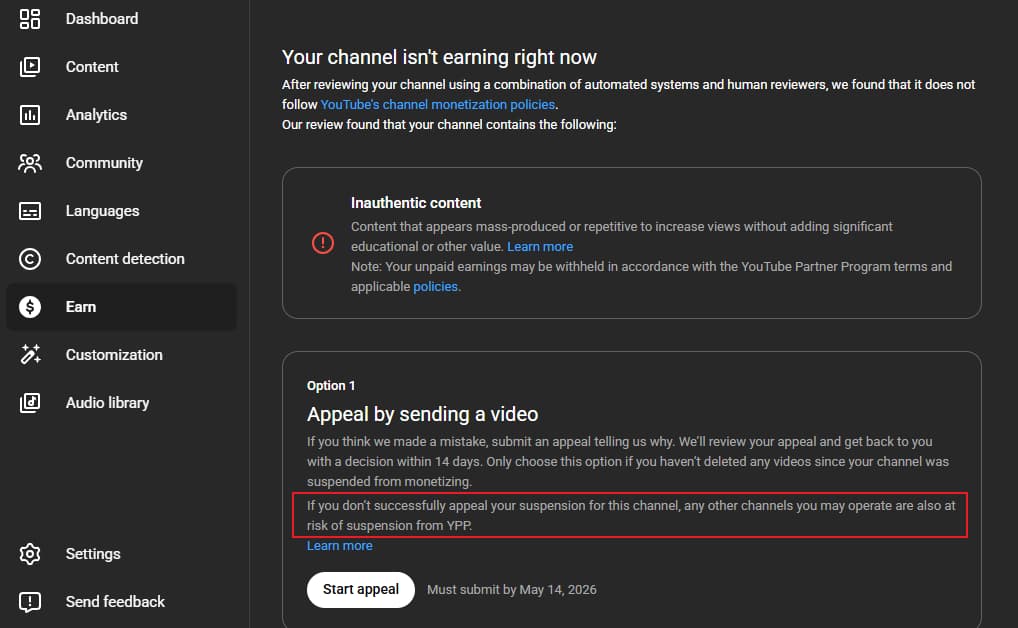
Yesterday I wrote that YouTube can be difficult for small creators who use AI-assisted workflows. Today my YPP (YouTube Partner Program) status was revoked, so I am recording the situation and the operational lesson.
The main issue is not only the loss of monetization. The deeper risk is that creators can spend time editing videos, building a workflow, and publishing consistently, but still have limited control over how the platform interprets the content. A review decision can change the channel’s income and distribution almost immediately.
For creators who use AI-generated or AI-assisted material, the disclosure checkbox is especially sensitive. I previously assumed that being transparent about AI use might make the review process smoother. In practice, it may also draw extra attention to the channel. That does not mean creators should hide AI use, but it does mean the channel should be prepared for stricter review.
Another risk is appeal uncertainty. If an appeal triggers a wider account review, creators need to think carefully before relying on only one platform for distribution, traffic, or income.
Practical Advice
Do not rely on YouTube as the only place where your work exists. Treat the platform as one distribution channel, not as the source of truth for your content archive.
For long-term resilience, keep an independent blog and publish supporting notes there. Even if a social media account loses reach, gets demonetized, or is removed, the website can still preserve the content, the context, and the links between projects.
Owning the domain, Markdown files, images, and deployment workflow gives creators more control. If the domain changes, the content can be redeployed elsewhere. If a platform changes policy, the blog remains a stable reference point for search engines, readers, and future projects.